Covid 19
The Covid crisis created an uncertain time for the performing arts sector, an area where many people’s incomes are linked to events that ended up being cancelled. While fears for SMEs and workers in the hospitality sector dominated the news headlines as measures to control the Corona virus in Ireland escalated, the arts sector ended up being particularly vulnerable to the raft of event cancellations and venue closures. For so many who, during this time, worked as creative freelancers, quite literally in the “gig economy,” the situation highlighted the precariousness of their working conditions.
Irish Street Arts Circus And Spectacle network (ISACS) reported a “stark increase” in enquiries from members on the extended social welfare scheme for artists since the cancellation of all events. They were unprecedented times and people just did not know how to handle this pandemic situation that was now worldwide. Fear, worry and uncertainty was everywhere.
The then Minister for Culture Josepha Madigan announced that the Arts Council will honour all funding commitments to fund recipients and that there’ll be no penalty for organisations unable to deliver funded projects because of the Covid-19 response, and urged organisations to prioritise paying artists and third parties. Reports from musicians and performers hit by venue closures had been that Social Welfare offices on the ground were responding well, given the difficulties performers had in providing evidence of unemployment. Like all government schemes and systems many individuals fell "through the cracks" as a "one size fits all" scheme never works 100%
It was an unprecedented situation for the arts and entertainment industry. There was a great fear that the longer it continued and everything remained closed, the more vulnerable the arts and entertainment industry would become. But hard work, true grit and determination has overcome the huge amount lost due to the shut down over the years since.
Irish circus not touring for first time since 1800's due to coronavirus restrictions


Circus owners fear the big top might fold for good
Circus families say they are being unfairly treated when it comes to Covid-19 supports
By: Kitty Holland Social Affairs Correspondent The Irish Times Wed Apr 07 2021
Traditional circuses may “never reopen” after the coronavirus pandemic, circus owners are warning. Among those facing the end of the road is Circus Gerbola, founded 20 years ago by Michael and Tara Gerbola. Both are from circus families, have been circus artists since childhood and describe their business as "our life, our identity, what we do". Three weeks into their 2020 tour, they had performed in Dungarvan, Co Waterford, and were due to open in Carrigaline, Co Cork, when they had to stop in March 2020. They had just invested more than €110,000 in recruiting artists from Argentina, Romania and Germany; in repainting, testing and certifying all equipment, as well as buying new lorries, caravans, kitchen appliances, trapeze equipment, props and costumes. All of it has lain idle in their yard, just outside Navan, Co Meath, since. Mould and mildew are appearing over the folded big top. "I can't know what state any of it will all be in until I open it up," said Mr Gerbola. "Rats could have got in and eaten it. I can't do it myself as you need about 30 people to do it."
Asked how he feels, looking at the condition of his family’s business, he looks away wiping tears from his face. "Last year there was hope but things just haven't gone anywhere. Yes, we get the PUP [Pandemic Unemployment Payment] and we got a grant from the Arts Council for a new contactless ticketing system. We are very grateful for that, but we are going to need a lot more to get out on the road again. “A new tent, second-hand will be about €40,000. All the trucks will have to be retested and serviced. There’s insurance. We’ll need to recruit artists and staff. In all? About €185,000. “I don’t know why we have been singled out for no business support whatsoever. Or whether we’ll ever get out on the road again.”
The Irish Showmen’s Guild said the businesses it represents are facing “discrimination” and “snobbery”. Gerry Curry, guild president, said the sector – including about 65 funfair operators – "need support similar to that going to other businesses". “We have emailed all the relevant departments and just get the run-around. We are going to have to get legal advice.”
David Duffy, whose family's Duffy's Circus has been going since the 1850s, said: "No matter what way you dress it up , it's discrimination. Is it that the Government don't understand, or that they don't care?" The main Government support for businesses affected by the pandemic – the Covid Restrictions Support Scheme (CRSS) – is administered by Revenue on behalf of the Department of Finance, providing up to €5,000 a week to eligible businesses. To qualify a business must have a “premises” and the scheme specifically excludes “circuses or funfairs that are not permanently in place”. The Arts Council operates an emergency stabilisation fund for arts organisations hit by the pandemic but they must already get the council’s strategic funding to qualify, and traditional circuses do not. Nor do they qualify for the Live Performance Support Scheme, the Small Business Assistance Scheme or the Tourism Business Continuity Scheme. A spokesman for the Department of Finance said it would “not be possible to amend” the criteria of the CRSS “to allow businesses excluded by these criteria to become eligible”. A spokeswoman for the Department of Tourism, Culture and Arts said: “There are supports available for all businesses impacted by Covid”, citing the PUP and the CRSS as the “principle elements of the Government response”. Circus was a recognised art and €130 million had been allocated to the Arts Council to support arts organisations.
A spokesman for the council confirmed traditional circuses were not in receipt of strategic funding and therefore, ineligible for the emergency stabilisation fund. Aontú TD Peadar Tóibín has made repeated representations to the Departments of Finance and of Culture and Arts and suggests a “snobbery” in their attitude to traditional circuses. "I reckon the majority of people in the country have attended a circus in their lives. I can't imagine many other performance art sectors would be able to say the same thing. Their reach is incredible, delivering their craft in practically every town in Ireland, " Mr Tóibín said, “Yet they have received practically no support during Covid. It needs to change or traditional circuses will be wiped out.”
Show must go on for circus 'cocooning' in Tralee
By; Paschal Sheehy. Thursday, 7 May 2020
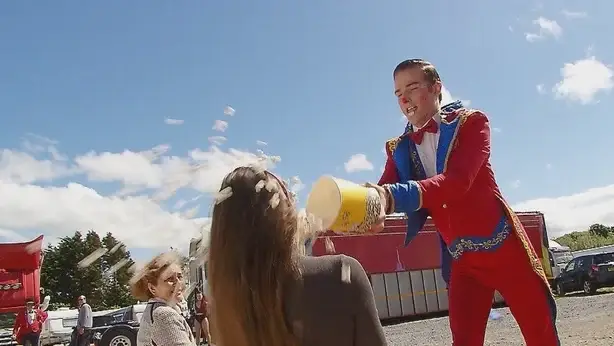
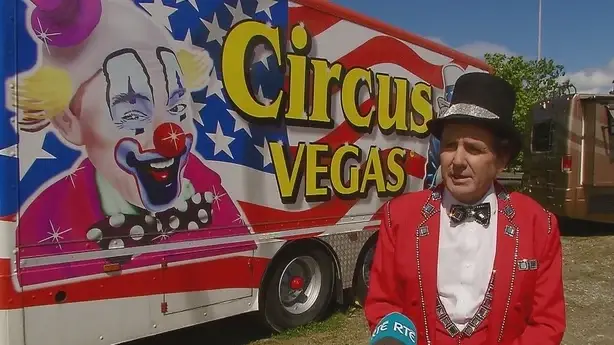
The ringmaster of one of the country's remaining family circuses has said they are determined that the coronavirus pandemic will not force the business to close. Circus Vegas, which is run by the Courtney family, has been cocooning in Tralee for the past eight weeks. Tralee was the last stop Circus Vegas made and the final performance took place in a car park on the outskirts of the town on 12 March. Since then, the car park has been home to members of the Courtney family and the other performers who make up the circus. The Courtney family has been associated with circus in Ireland for more than four decades. Before that, they toured with drama and variety.
Tommy Courtney says he was born into life on the road. When he was younger, he was a trapeze artist. For the past 25 years he has been ring master. "I love the circus. Everyone here loves the circus," he says. "There is no better life than being on the road - it's just a fantastic way of life." Tommy and the other performers find life in lockdown strange. Since it started, they have spent their days practising, waiting for the day when they will be able to perform again. Tommy has no doubt that that day will come and, notwithstanding rules on social distancing introduced to curb the spread of coronavirus, he's convinced that there will be a place for the circus in post-pandemic life in this country. "We are all in the same boat. We are all going to get out of this and we will be back entertaining you again very,

very soon," Tommy says. "Circus has been around for hundreds of years, and it will be around for hundreds of years more. As long as there are people like the people we have and ourselves, we love doing what we do and we will always keep doing it, no matter what."
Kourtney Victoria is a hula hoop and trapeze artist. She's the third generation of the Courtney family to perform in the circus, and she has been performing since she was old enough to walk. But, like the other performers in Circus Vegas, Kourtney's last show was in Tralee on 12 March and she has been cocooning ever since. "Obviously, it has been harder on all of us because we are so used to working all the time," Kourtney says. "Of course there are some horrible things happening in the world, and my heart goes out to anyone who is going through it, but we do try and keep positive around here and try to look at the positive of everything." Kourtney says the people of Kerry have been amazing in their generosity towards the circus.
Each afternoon, Circus Vegas performers have been gathering around the circus ring to practice and maintain their skills. No audience means no ticket sales and no income for the past two months, putting huge strain on the business. Circus Vegas performers have vowed to put on a special performance to thank the people of Kerry for their support once restrictions are lifted because, they say, the show must go on.
Circus in crisis.
(Even if the tent goes up, the problems won’t go away. Several lifetimes’ work at threat as Circus Gerbola faces insurance hikes and reduced capacity)
By; Conor Pope. Thu May 28 2020
The Circus Gerbola trailers, trampolines and trapeze swings which normally travel the country’s roads on days like today are locked down on a small Co Meath farm as sad clowns and grounded acrobats kick their heels in frustration. Instead of the heady cocktail of laughter, grease paint and death-defying stunts, the performers have been trying to entertain themselves with more pedestrian pursuits such as gardening and strolling country roads in full bloom. It’s been a struggle.
That struggle started in March when the circus was setting up in Carrigaline in Co Cork ahead of a St Patrick's weekend run. Word reached the performers that they were to shut as part of nationwide efforts to contain the spread of Covid-19. The tent was dismantled, the trailers loaded and off they headed to their winter base on the Gerbola family farm near Kells. "Our performers wanted to go to their homes across Europe to be with their families because they were afraid of what was coming. Many were able to get away but some couldn't and they're here with us and for them it has been horrendous," circus owner Tara Gerbola says.
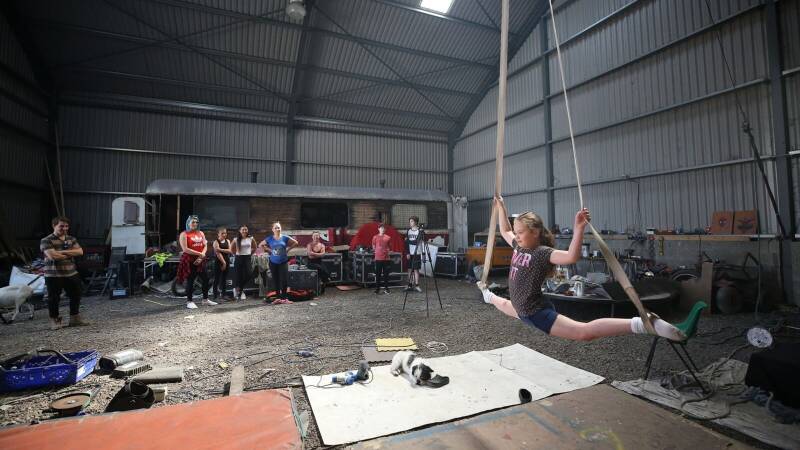
As she talks in a farmyard barn, two small children bounce on a trampoline behind her as one woman juggles a dizzying array of balls nearby and another walks a tightrope. “They have to keep practising, they’ve no choice,” Gerbola says of the performers. “Their bodies are used to this and they can’t just stop. They practise every day even though we have no shows, it’s hard on them.” It’s hard on the owners too. “It’s so strange to be here on a summer’s day when we’d normally be on the road, we’re never here now,” she says. “It’s such a weird time.” She has been watching what has been happening to circus communities across Europe. “Some are much worse off and have had to stay wherever they were when lockdown was declared. They were stuck, we’re grateful to have our farm and a place we could come home to.”
Under the phased exit from Covid-19 restrictions, the circus may be able to re-open on August 10th. “We don’t even know if that will happen because everything keeps changing,” Gerbola says. Even if the tent goes up, the problems won’t go away. “We’ll have to reduce capacity by two-thirds for social distancing and our insurance is climbing. This year it jumped 78 per cent. When that happened we’d a big decision to make about continuing. But we’ve put so much into this, you’re talking about a lifetime’s work.” Several lifetimes’ work in fact. The Gerbolas’ circus roots stretch back eight generations and their family tree takes in some of the most well-known names in the business, including the Fossetts. Tara Gerbola and her husband, Mikey, grew up with travelling circuses – he was a clown, she was a trapeze artist Then she ran away from the circus to join an accounts department in Tesco. "I couldn't stand it there so left after a year," she says. "That was in 2001, the year we started our own circus." It faces an existential threat now. “My heart tells me we will survive, we have survived so many things in the past,” she says.
As she speaks, her husband sitting nearby arches an eyebrow. He may be a clown but he’s not fooling around now. “Things are very different,” Mikey says. “Foot and mouth restricted us but didn’t close us. The recession hit hard but didn’t close us. We’ve overcome many challenges and nothing has ever closed us, nothing has ever been like this.” Outside the barn, performers are goofing around. Denisa Cristea, from Romania, specialises in "aerial work and fast costume changes" and when she joined the circus in February she didn't sign up to spend her summer on an Irish farm.